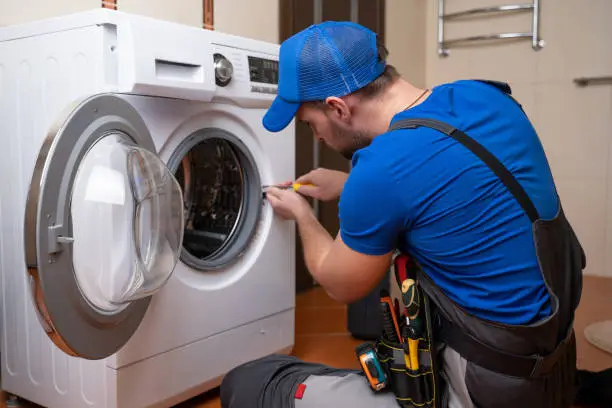
Your automatic washing machine is one of the most essential appliances in your home. But imagine opening the lid only to find a tub full of dirty, stagnant water that refuses to leave. It is a frustrating situation, but fortunately, you do not always need to call an expensive technician to fix it.
Before you panic, explore these 5 common reasons why your washing machine is not draining and learn how you can fix it yourself in just a few minutes.
1. Inspect the Drain Hose (Check for Kinks or Clogs)
The most common reason for drainage issues is a physical blockage or bend in the drain hose located at the back of the machine.
- The Fix: Pull the machine away from the wall and check if the hose is twisted or kinked. If it is straight, detach the hose and check inside for any trapped socks, small clothing items, or lint buildup. Flush it through with high-pressure water to clear any debris.
2. Clean the Drain Pump Filter
Front-load washers and many modern top-load washers feature a small access door at the bottom front of the machine. Inside sits the pump filter, which catches loose coins, buttons, hairpins, and lint before they can damage the pump.
- The Fix: Place a shallow tray or towel on the floor (water will spill out when you open it). Slowly unscrew the filter counter-clockwise, pull it out, and clear away any trapped debris. Wash the filter thoroughly under a tap and screw it tightly back into place.
3. Check for a Jammed Pump Impeller
If the filter is clean but the machine still refuses to drain—or makes a strange humming or grinding sound—something might be jamming the pump’s mechanical parts.
- The Fix: Look inside the housing where you just removed the filter. You will see a small plastic fan blade (the impeller). Use a pen or screwdriver to gently nudge the blades. If it does not spin freely, check for trapped threads, rubber bands, or wires wrapped around the shaft.
4. Test the Lid Switch or Door Lock Assembly
Automatic washing machines are designed with strict safety protocols. For security reasons, the machine will not drain or spin if it senses that the door is wide open.
- The Fix: If the door latch or lid switch is broken, the machine’s computer will assume the door is open. Look at your digital display—if you see error codes like OE (LG), 5C/5E (Samsung), or dE, it usually points to a faulty door switch that needs replacement.
5. Stop Using the Wrong Detergent (Too Much Suds)
Using regular hand-wash washing powder in a High-Efficiency (HE) or front-load automatic machine creates an excessive amount of soap suds. This thick foam confuses the machine’s water-level sensors, tricking the system into stopping the drain cycle.
- The Fix: Switch over to dedicated High-Efficiency (HE) detergent. If your tub is currently filled with foam, turn off the machine for an hour to let the suds dissolve naturally, then run a simple ‘Rinse & Spin’ cycle without adding any clothes.
When to Call a Professional Technician
If you have tried all of the troubleshooting steps above and the tub remains full of water, the drain pump motor may have burned out or the main electronic control board (PCB) might be malfunctioning. At this stage, it is best to leave the job to a certified professional